
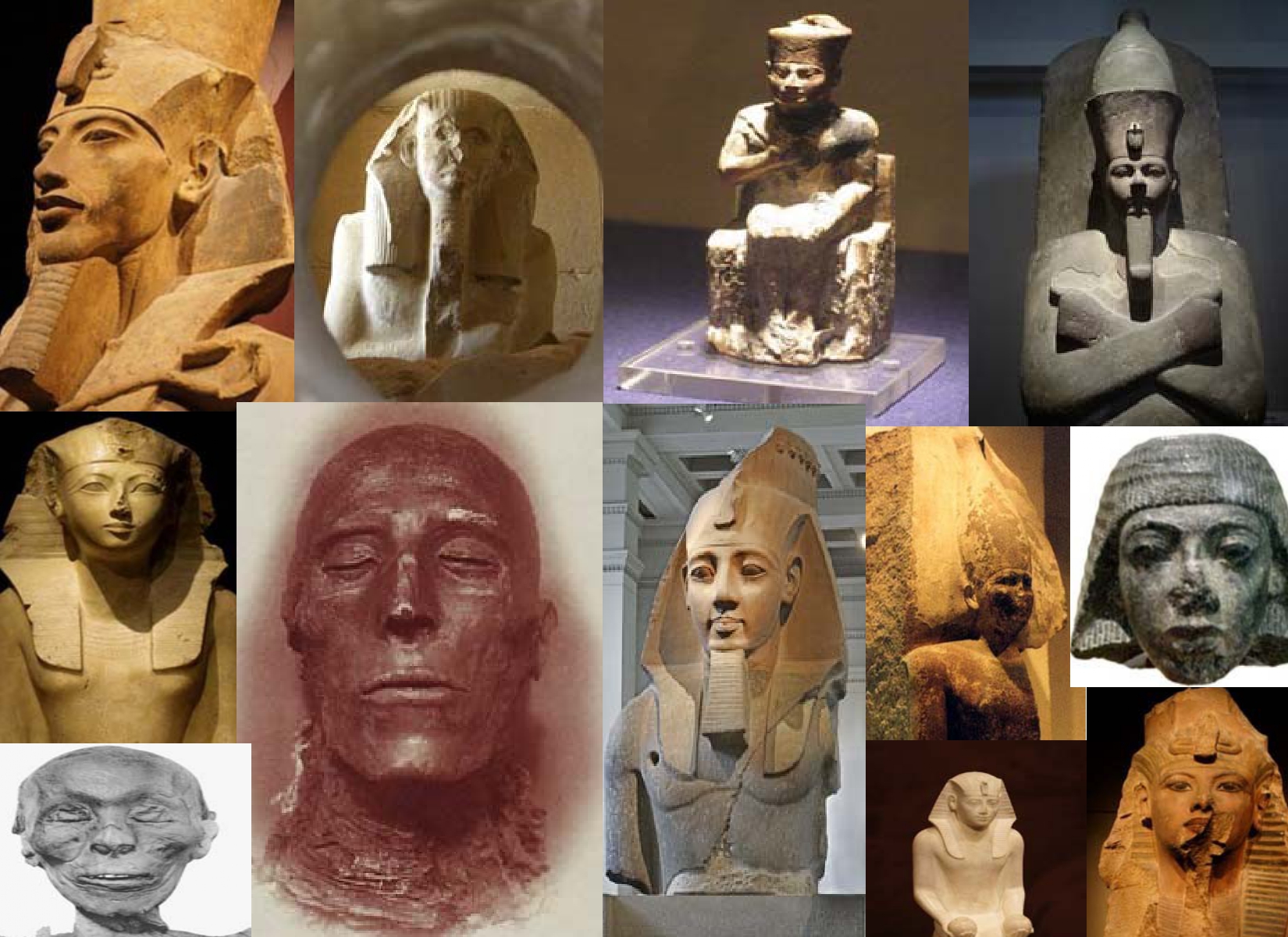
The Pharaonic Era in Egypt
The Pharaonic era in Egypt spans approximately three thousand years, from 3200 BC until the entry of Alexander the Great into Egypt in 323 BC.
During this era, Egypt witnessed numerous stages of renaissance and progress, leaving behind a vast legacy of civilization, architecture, science, and arts.
Historians divide the Pharaonic era into three successive periods:
- The Old Kingdom
- The Middle Kingdom
- The New Kingdom
Historians also divide this era into thirty ruling dynasties, distributed across these three periods of Egyptian history.
The Archaic Period (Dynasties 1 and 2)
King Menes is credited with achieving the political unification of Egypt around 3200 BC. He established the first ruling dynasty in Pharaonic Egyptian history. To secure the country's unity, Menes founded a city near the head of the Delta, later named Memphis. This unification was a crucial factor in Egypt's prosperity in all aspects of life.
The Old Kingdom (Dynasties 3 to 6)
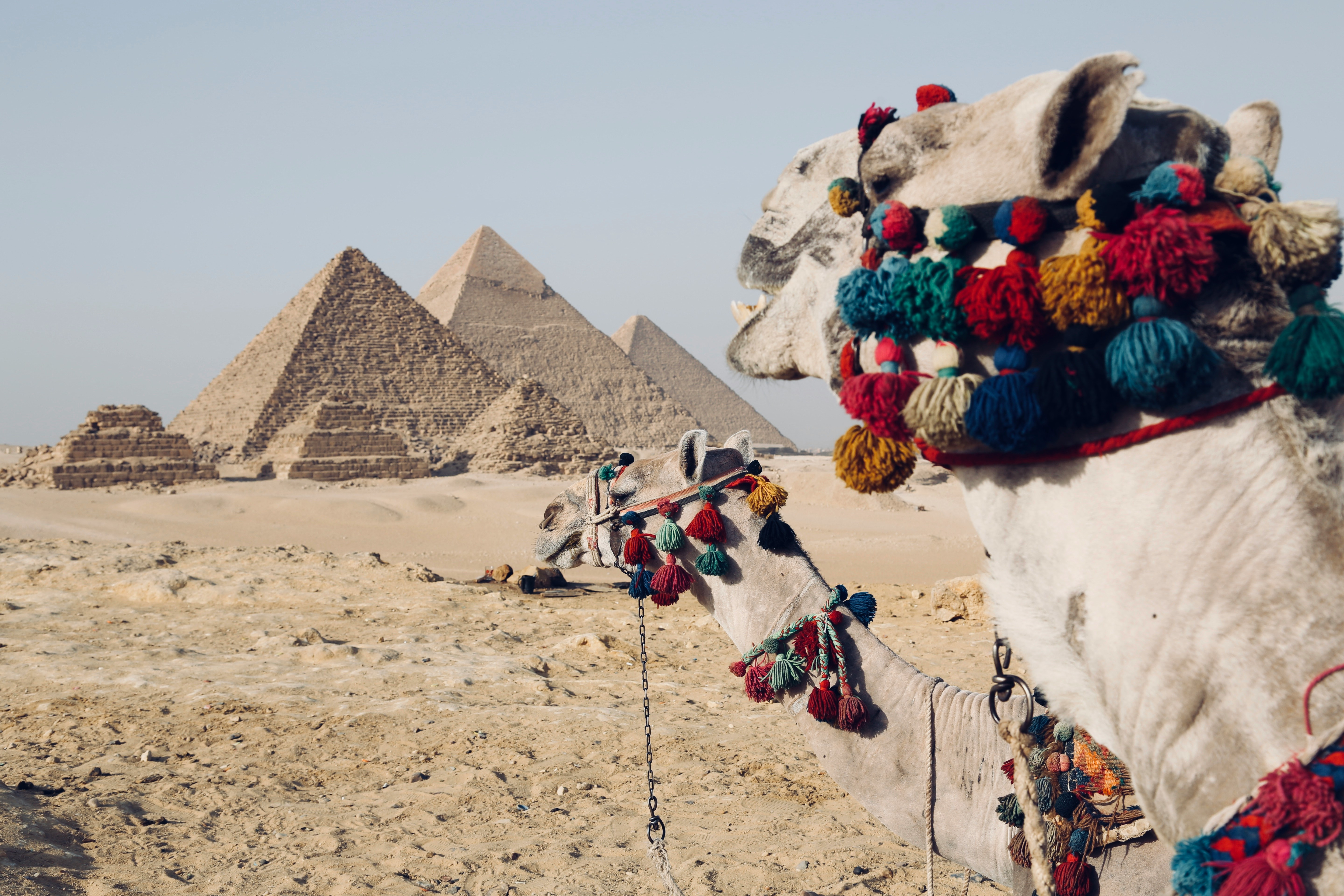
This era is considered the youth of Egypt, characterized by stability, security, and peace, which facilitated its economic, cultural, and artistic progress. The rule of the Old Kingdom's kings, the pyramid builders, began around 2800 BC after the throne moved to Memphis under Pharaoh Djoser, the owner of the oldest known pyramid, the Step Pyramid of Saqqara. Egyptian civilization flourished during this era, evidenced by the magnificent Giza pyramids of Khufu, Khafre, and Menkaure.
The First Intermediate Period (Dynasties 7 to 10)
This period began around 2200 BC when the reins of power slipped from the pharaoh's hands until Mentuhotep II managed to reunify the country.
The Middle Kingdom (Dynasties 11 and 12)
After Mentuhotep II, the prince of Thebes, reunified the country around 2065 BC, he established a strong government that succeeded in consolidating order and security, leading to economic prosperity and the advancement of arts and architecture. Around 2000 BC, the rule of the great Amenemhat I began, who played a major role in building the renaissance that emerged during the Middle Kingdom.
The kings and queens of the Twelfth Dynasty gained global fame in politics, war, culture, civilization, and religion, such as:
- Ahmose, the hero of liberation.
- Amenhotep I, the just, who issued a law prohibiting forced labor and establishing fair wage and incentive standards.
- Thutmose I, the warrior who expanded Egyptian borders to the north and south, spread education, and expanded mining operations.
- Thutmose the third, the emperor with unique military genius and the first great conqueror in the history of the world.
- Akhenaten, the first monotheist and the first king in human history to call for the oneness of God, the creator of all things.
- Hatshepsut, the great queen who ruled Egypt for nearly twenty years, during which Egypt reached its peak in civilization, architecture, and international trade.
The Second Intermediate Period (Dynasties 13 to 17)
During the Twelfth Dynasty, around 1725 BC, nomadic tribes from Palestine, known as the Hyksos, invaded Egypt. When the Hyksos' power weakened, the princes of Thebes fought to regain their country's freedom, and Ahmose succeeded in capturing their capital in the Delta and expelling them from the country.
The New Kingdom (Dynasties 18 to 20)
After expelling the Hyksos, Ahmose returned to his country in 1571 BC, suppressed the Nubian revolts in the south, and focused on internal reforms. He established a well-organized standing army equipped with the latest weapons and chariots. Ramses II is one of the most famous kings of this era, and his wars were the last efforts by the New Kingdom's kings to maintain unity. His conflict with the Hittite king ended with a non-aggression treaty after the Battle of Kadesh, considered the first peace treaty in history. Egypt became a major power and a vast empire.
The Late Period (Dynasties 21 to 30)
This period marked the end of Pharaonic history. Egypt was subjected to successive occupations, first by the Assyrians in 670 BC, then by the Persians, until the end of the pharaohs' rule with the Thirtieth Dynasty and the entry of Alexander the Great into Egypt.
Arts of the Pharaonic Civilization
Architecture:
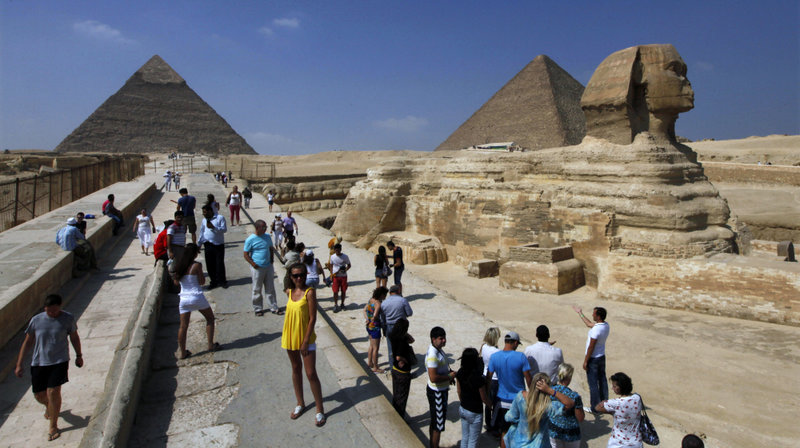
The Egyptians excelled in architecture, evidenced by their enduring monuments. In the Old Kingdom, mastabas and pyramids were built, representing funerary architecture. The first pyramid built was the Step Pyramid of Djoser, followed by the Meidum Pyramid, but the most famous are the three Giza pyramids and the Sphinx, built during the Fourth Dynasty. The number of pyramids built as tombs for the pharaohs reached 97.
Funerary temples began to spread in the Middle Kingdom, and the Twelfth Dynasty kings focused on irrigation projects in the Fayoum region. The most famous temple built by these kings is the Labyrinth, or the "Palace of Labyrinth," as the Greeks called it, built by King Amenemhat III in Hawara near Fayoum. They also built fortresses and walls on Egypt's eastern borders.
The New Kingdom is considered the greatest period of architectural styles, murals, crafts, and fine arts, evident on the walls of some massive temples with diverse designs, such as Karnak, Luxor, and Abu Simbel.
The era of Thutmose I marked a turning point in pyramid construction, with hidden tombs carved into the mountain in the western bank of Luxor, characterized by rich and beautiful funerary furnishings, as seen in the tomb of Tutankhamun.
Artists of this era used sunken and shallow reliefs to preserve wall inscriptions. The latest discovery in the Valley of the Kings is the tomb of Ramses II's sons, one of the largest tombs containing 15 mummies.
Pharaonic obelisks were erected in pairs at temple entrances, carved from granite. Examples of the Old Egyptian Empire's architecture include the temples of Amun, Khufu, Karnak, Luxor, the Ramesseum, and Hatshepsut in the eastern bank, and rock-cut temples like the Great and Small Abu Simbel.
New trends emerged in architecture and visual and applied arts, clearly evident in the art of sculpting large and small statues and decorating temple columns and wall inscriptions.
Literature:
The Egyptians' writings and literature demonstrate their mastery, evident in their legacy. History will not forget the Egyptians' contribution to humanity with the invention of writing, which the Greeks called "hieroglyphics." The hieroglyphic alphabet consists of 24 letters. The ancient Egyptians used black or red ink to write on papyrus.
The Egyptians excelled in religious literature, which dealt with religious beliefs, theories about the afterlife, cosmic mysteries, various myths of gods, prayers, and hymns. Examples of religious literature include the Pyramid Texts and the Book of the Dead.
The ancient Egyptian writer also excelled in storytelling, using words to convey wisdom and etiquette. The Egyptians were keen to narrate their heritage of proverbs and sayings, repeating them in their festivals, celebrations, and traditions.
The Egyptians were among the most eager people to record their history and events. This cultural step led to the emergence of many Egyptian writers, sages, and intellectuals who left behind works that reflect the level of thought and culture in Egypt.
Music:
The Egyptians loved music and singing, using them in education, public and private celebrations, especially in the army, as well as in prayers and funerals. The Egyptians of the Old Kingdom knew wind and string instruments like the harp (its Pharaonic name was Teboty) and invented and developed various rhythmic and melodic instruments throughout their ancient history.
Clothing and Adornment:
The Egyptians adorned themselves with jewelry, characterized by high artistic precision and beautiful designs. Decorative elements were inspired by nature, such as papyrus, palm, lotus, and gemstones. They used amulets believed to protect them from evil forces. Women, in particular, cared for their adornment, using kohl, bracelets, necklaces, rings, pendants, and henna. Clothing varied in Pharaonic Egypt according to social class, made from fine linen or silk fabrics imported from ancient Syria, and varied according to occasions.






Comments
0No comments yet. Be the first to share your thoughts!