
The Eternal Weave: How Egypt Dissolved Empires and United Altars
Egypt is not just a country with a history; it is a living laboratory of human coexistence. For millennia, Egypt has possessed a unique "cultural alchemy"—an uncanny ability to absorb every civilization that crosses its borders, stripping away the enmity and blending the essence into a single, unbreakable Egyptian identity. This is the story of how a land of many faiths became one heart.
The Great Rescue: From Roman Persecution to Islamic Peace
To understand modern Egypt, one must look back to the year 639 AD. At that time, Egypt was gasping under the weight of the Byzantine (Roman) Empire. The native Coptic Christians were not just politically oppressed; they were spiritually persecuted. Because of doctrinal differences, Coptic popes were hunted, and their followers faced brutal taxation and torture.
When Amr ibn al-Aas entered Egypt with the Islamic army, it wasn't merely a conquest—it was, for many, a liberation. The Romans fled, and a new era began. In a gesture that set the tone for the next 1,400 years, the Muslims invited the Coptic Pope Benjamin out of hiding, restored him to his seat, and guaranteed the safety of every church and monastery in the land.
A Slow Embrace: Faith by Choice, Not Force
A common misconception is that Egypt became a Muslim-majority country overnight. In reality, this transition was a slow, organic process that took nearly 400 years. There was no "conversion by the sword." Instead, the Egyptian people—known for their deep spirituality—gradually blended their ancient traditions with the new faith.
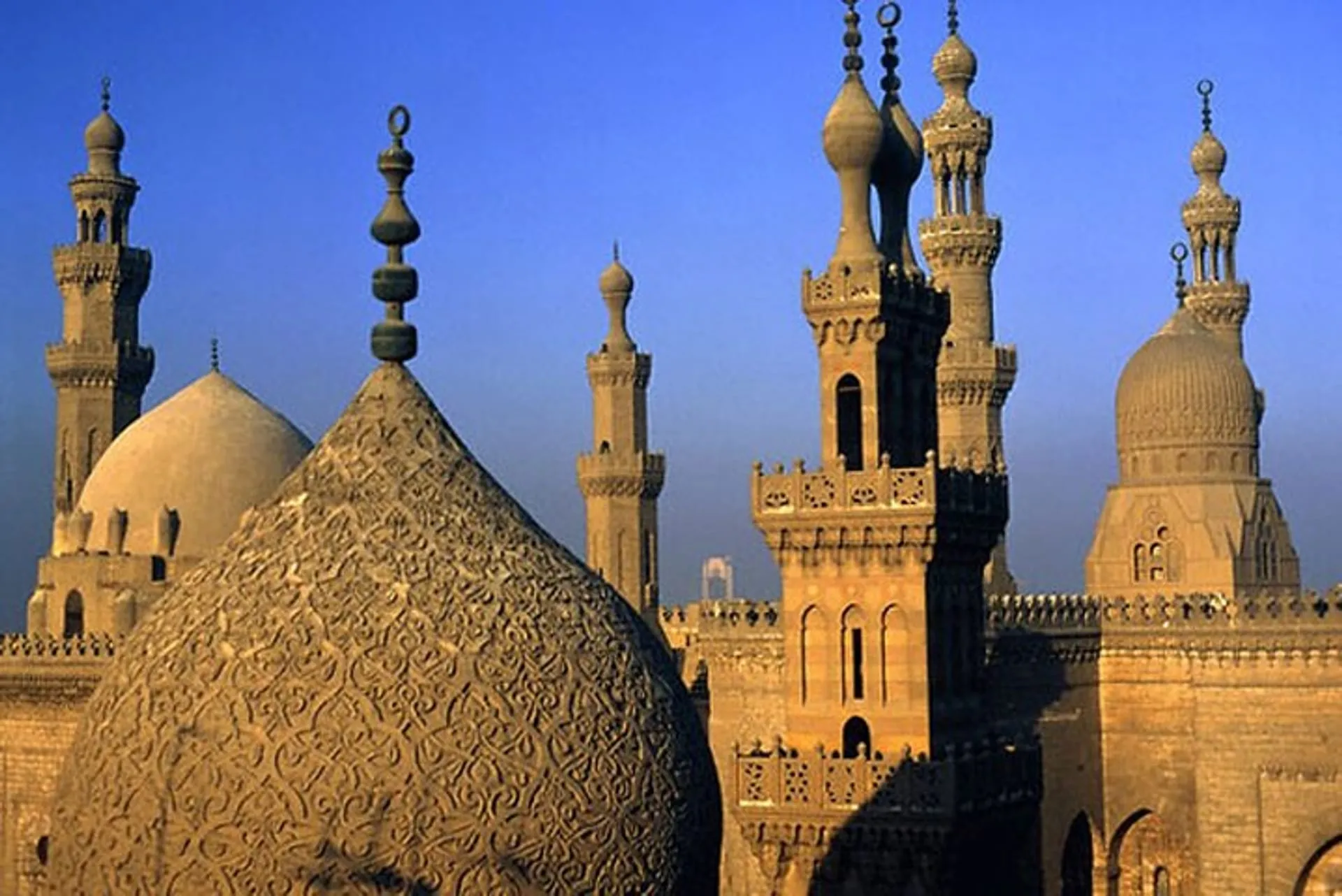
For centuries, Egypt remained majority Christian under Muslim rule. The two communities didn't just live "side-by-side"; they lived "together." They shared the Nile, celebrated the same harvest festivals, and influenced each other's art and architecture. This slow melting process is why a visitor today can see Islamic geometric patterns inside old churches and Coptic-style motifs in ancient mosques.
The Truth About the 'Jizya'
A point of great historical integrity is the Jizya. Far from being a "punishment," it was a social contract. It was a tax levied only on able-bodied men who could fight. Why? Because Christians were exempt from military service in the Islamic state. In exchange, the state was religiously mandated to protect them.
Women, children, the elderly, the poor, and the clergy were strictly exempt.
It was a fee for "protection and exemption," ensuring that those who did not join the army still contributed to the safety of the land they shared.
Partners in the State: The Coptic Role in Governance
From the very beginning, Muslims recognized the administrative genius of the Egyptians. Coptic scholars, architects, and accountants became the backbone of the Islamic state. From the Fatimid era to the Great Mohamad Ali Pasha, Copts held high offices as ministers and advisors. The famous architect of the Mosque of Ahmad ibn Tulun was a Copt, proving that in Egypt, talent and loyalty to the soil always outweighed religious labels.
.jpg)
The Jewish Presence: A Safe Harbor
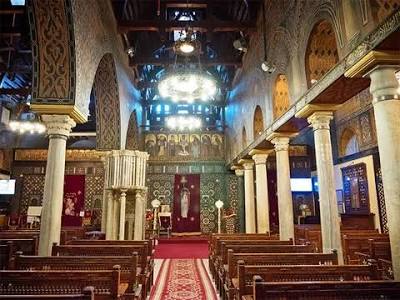
This Egyptian tolerance extended to the Jewish community as well. While Jews faced expulsion and ghettos in medieval Europe, they found a safe haven in Egypt. The Ben Ezra Synagogue in Old Cairo stands just meters away from the Hanging Church and the Mosque of Amr ibn al-Aas. For centuries, Jewish philosophers (like Maimonides), traders, and citizens lived safely, contributing to the vibrant fabric of Cairo’s markets and intellectual life.
.jpg)
The Egyptian Filter: Absorbing the World
Egypt has a "filter." Whether it was the Greeks, Romans, Arabs, Mamluks, or Ottomans, every group that entered Egypt eventually stopped being "foreigners" and started being "Egyptian." The land absorbs the newcomer.
Today, when you walk through "The Complex of Religions" in Old Cairo, you aren't just looking at old stones. You are looking at the birthplace of a culture that refuses to be divided. You are standing in a place where the adhan (call to prayer) and the church bells harmonize in a way that sounds like home to everyone, regardless of race, color, or creed.
In Egypt, we don't just tolerate each other. we have dissolved into each other.
Traveler’s Tips: Navigating the Cradle of Religions
If you’re planning to witness this "Cultural Melting Pot" firsthand, here is how to make the most of your visit to Old Cairo (Fustat):
The "Trinity" Walk: You can visit the Mosque of Amr ibn al-Aas, the Hanging Church, and the Ben Ezra Synagogue all on foot within a 5-minute radius. It is one of the few places on Earth where three faiths share a single courtyard.
Look for the Details: While in the Coptic Museum, look for the "Ankh" (the ancient Egyptian key of life) carved alongside Christian crosses. It’s the perfect symbol of how Egyptians blended their Pharaonic past with their Christian present.
The Cave Church: Don’t miss Abu Serga (St. Sergius). Head downstairs to the crypt where the Holy Family is believed to have stayed. It is a profound, quiet space that feels like a time capsule.
Dress Code: While Egypt is very welcoming, remember to dress modestly. Women should carry a light scarf for entering the Mosque, and everyone should remove their shoes at the mosque entrance.
Timing: Visit on a weekday morning to avoid the weekend crowds. Friday mornings are particularly peaceful near the Mosque of Amr ibn al-Aas.





Comments
0No comments yet. Be the first to share your thoughts!