
Islamic Era In Egypt
The Prophet Muhammad's Message to Al-Muqawqis and the Islamic Conquest of Egypt
In the seventh year of Hijra (628 AD), the Prophet Muhammad (peace be upon him) sent a letter to Al-Muqawqis, the ruler of the Copts, inviting him to Islam. Al-Muqawqis received the Prophet's messengers well. Although he hesitated to accept the invitation to Islam, he sent a gift to the Prophet, which included Lady Maria, an Egyptian woman, and some Egyptian products. This gift strengthened the ties between Egypt and Arabia during the Prophet's time, especially after the birth of his son Ibrahim from Lady Maria. This strengthened the kinship with the Egyptians and paved the way for the Islamic conquest of Egypt. The Prophet's message came at a time when Egypt was suffering from turmoil, particularly due to religious differences between the Egyptians and the Byzantines.
The Islamic Conquest of Egypt
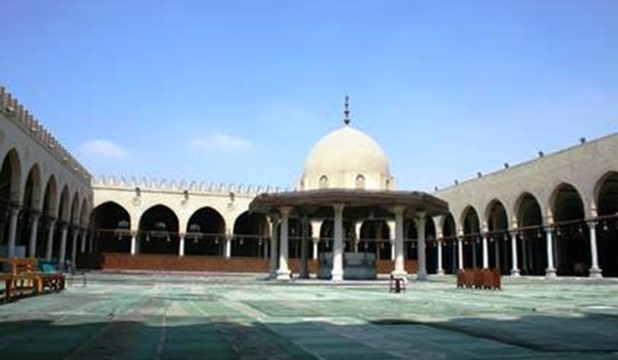
Egypt was conquered during the reign of Caliph Umar ibn al-Khattab (may God be pleased with him) by the companion Amr ibn al-Aas in 20 AH / 641 AD. This marked the beginning of an important phase in the political history of Islamic Egypt, during which it played a significant role throughout Islamic history, spanning several Islamic states and empires, starting with the Umayyad Caliphate, then the Abbasid Caliphate, the Ikhshidid dynasty, the Fatimid Caliphate, the Ayyubid dynasty, the Mamluk era, and finally the Ottoman Empire, under which Egypt was a province for about three hundred years.
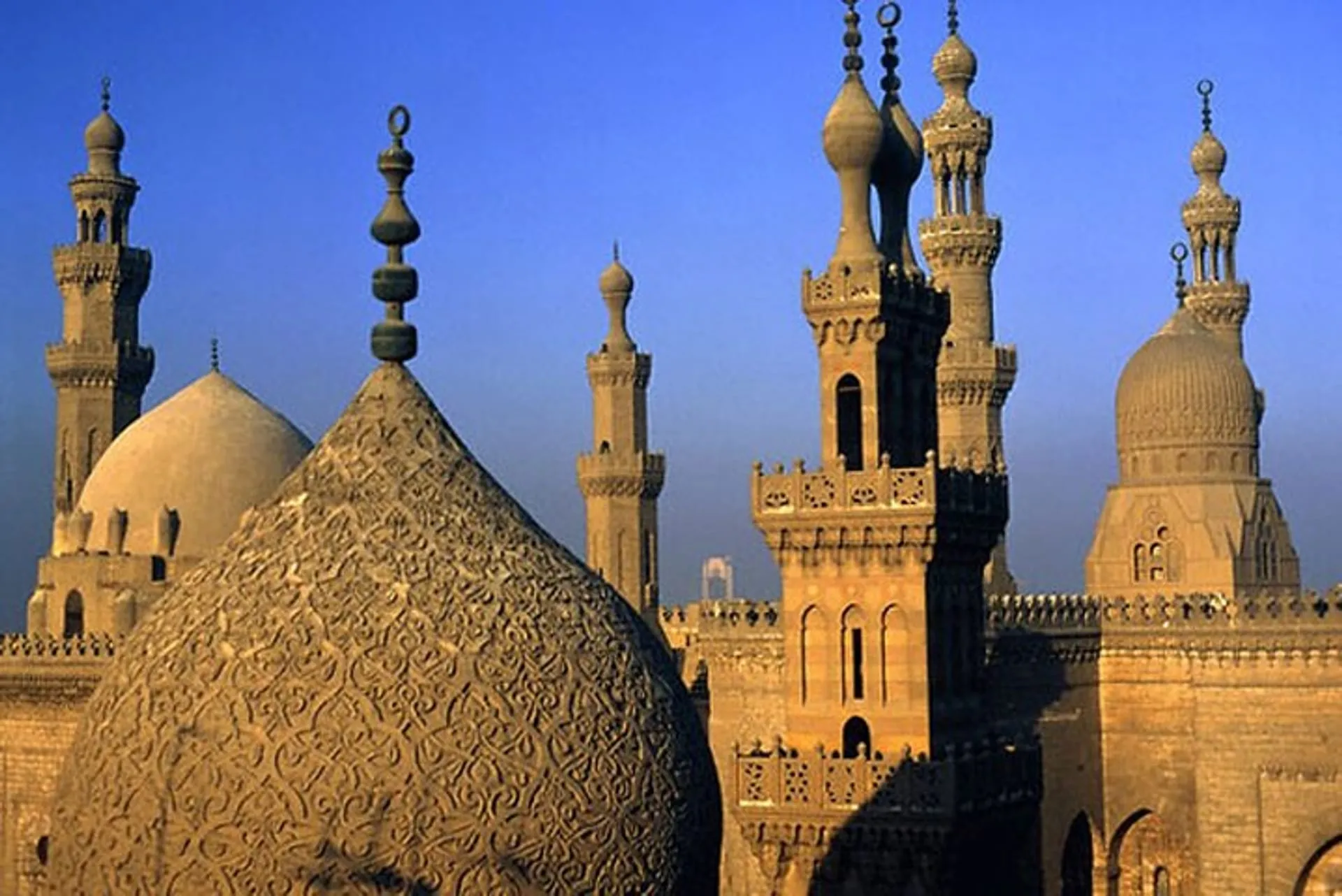
During Islamic rule, Egypt witnessed a comprehensive renaissance in architecture and arts, represented by Islamic architecture with the construction of numerous mosques, fortresses, and walls. Decorative arts also flourished, exemplified by the first Islamic capital in Egypt, Fustat, which houses the Amr ibn al-Aas Mosque. The Nile Meter on Rawda Island is considered the oldest Islamic Egyptian monument, built by the Abbasid Caliph Al-Mutawakkil Billah in 245 AH.
The prosperity of Islamic architecture is evident in the city of Al-Qata'i and the Ahmad ibn Tulun Mosque, which was built following the model of the Amr ibn al-Aas Mosque, with the addition of a fountain, minaret, buttresses, decorations, and a foundation plaque. The minaret of the Ibn Tulun Mosque is unique in its design among Egyptian mosques. Islamic architecture advanced during the Fatimid era, with Al-Azhar Mosque being one of the most famous examples of Fatimid architecture in Egypt, along with Al-Anwar Mosque (Al-Hakim bi-Amr Allah) and Al-Aqmar Mosque.
The Ayyubid era was also distinguished by architectural advancements, with the Citadel of Saladin being one of its most famous landmarks, representing Islamic architecture from the Ayyubid period to the era of Muhammad Ali.
The Mamluks also left behind a great artistic legacy, represented by mosques, domes, Sufi lodges, palaces, schools, fortresses, and public fountains.
The Ayyubid Dynasty

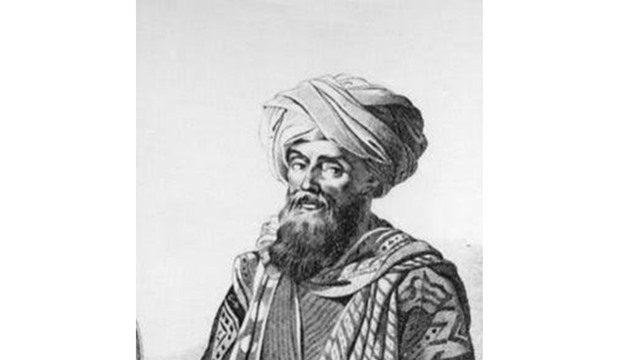
After the death of the Fatimid Caliph Al-Adid (the last of the Fatimid caliphs), control over the government in Egypt fell into the hands of Salah al-Din ibn Najm al-Din Ayyub. His power increased and was solidified with the arrival of the entire Ayyubid family from the Levant to Egypt, where they were placed in all the major positions in the country, replacing the senior Fatimid officials. Salah al-Din played a significant role in gradually establishing the Ayyubid state in Egypt. He began by weakening Caliph Al-Adid, removing his commanders from Cairo, and replacing them with his own loyal men. He also initiated the widespread establishment of schools, with the first being the Nasiriya School in Fustat.
Several years before his death, Salah al-Din divided his kingdom among his sons, brothers, and their children, with Egypt going to his son Al-Aziz Uthman.
The Ottoman Rule in Egypt
With the entry of Sultan Selim I into Egypt in 1517, Egypt became a province of the Ottoman Empire. The Ottoman Sultan established a system of government in Egypt based on the distribution of power among three competing bodies to prevent any one of them from seizing absolute authority. The Wali (governor) was the Sultan's representative in Egypt, residing in the Citadel. He was appointed for a term of only three years and was responsible for implementing the Sultan's orders, sending tribute, and leading the army. The Diwan (council) consisted of senior Ottoman army officers, high-ranking officials, scholars, and notables, and its role was to assist the Wali in governing the country. The Diwan had the authority to object to the Wali's decisions and request his dismissal. The Mamluks played a role in local administration, as the Ottomans allowed them to govern the provinces to benefit from their expertise in the country's affairs.
The three bodies (the Wali, the Diwan, and the Mamluks) were in constant conflict over power, and Egyptians were excluded from military service, and a system of isolation was imposed on the country.
When Ali Bey Al-Kabir assumed the position of Sheikh Al-Balad—the highest position held by the Mamluks—he strengthened his influence and allied with Sheikh Daher Al-Omar in Palestine against the Sultan. He expelled the Ottoman Wali in 1679 and declared Egypt's independence. He was able to extend his influence to the Hijaz and Yemen and sent an army led by Muhammad Abu Al-Dhahab to support his ally, the governor of Palestine, against the Ottoman Sultan. The Ottoman Sultan was able to win over Abu Al-Dhahab's army and end Ali Bey Al-Kabir's rule in 1773. Egypt returned to being an Ottoman province, and Abu Al-Dhahab was appointed as its governor. He died in 1775, and the country's conditions worsened after the Mamluks regained effective control of the government.
The Mamluk Sultanate

In the late days of the Ayyubid dynasty, the Mamluks controlled most of the major positions in Egypt. With the killing of "Turan Shah," the last of the Ayyubid sultans, Shajar al-Durr (the wife of King Al-Salih Ayyub) married one of the Mamluk leaders, "Aybak Al-Turkmani," and thus the Mamluk Sultanate was established in Islamic Egypt. Sultan "Aybak" spent most of his years of rule (1250–1257) repelling the raids of the Ayyubid kings of the Levant on Egypt. The Mamluk Sultanate expanded to include Egypt and the Levant, and after "Aybak Al-Turkmani" and his son, a group of sultans known as the Bahri Mamluks took the throne, the most famous of whom were Sultan "Qutuz" (1259–1260), who inflicted the first defeat on the Mongols in their history at Ain Jalut, and Sultan Al-Zahir "Baybars" (1260–1277), who succeeded in establishing the Abbasid Caliphate in Cairo and gave Egypt and its Mamluk sultans religious sovereignty over the Islamic world.
The Mamluk era ended with the entry of the Ottomans into Egypt after their victory over Sultan "Tuman Bay" at the Battle of Ridaniya in 1517 AD.
The Fatimid State
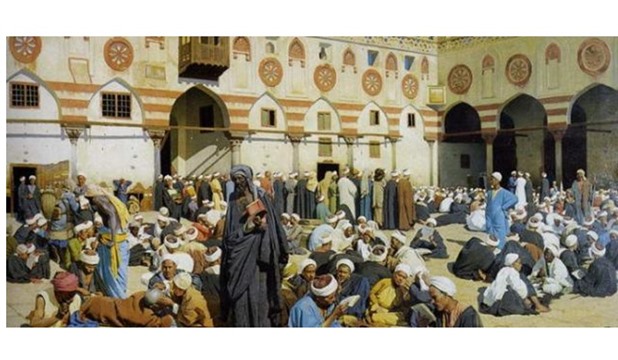
The powerful Fatimid state was established in Tunisia and attempted to conquer Egypt since 913 AD. When the Ikhshidid state weakened, especially as it was nearing collapse after the death of Kafur, the commander Jawhar al-Siqilli, the minister of the Fatimid Caliph al-Mu'izz li-Din Allah, managed to conquer Alexandria in 969 AD. He declared the sovereignty of the Fatimid Caliphate over the country, which lasted in Egypt for about two centuries (969-1171 AD). The Fatimid Caliphate moved from Tunisia to Egypt when Caliph al-Mu'izz li-Din Allah al-Fatimi came there in 972, four years after the Fatimid conquest of Egypt. During these four years, Commander Jawhar al-Siqilli worked to implement the Fatimid plan for which Egypt was conquered, which was to expand the state eastward. During those four years, Jawhar founded a new capital for Egypt, Cairo, and built a palace for the Caliph there, as well as building Al-Azhar Mosque to be an institute for teaching Islamic sciences.
The Ikhshidid Dynasty
After the collapse of the Tulunid state at the hands of the Abbasid commander Muhammad ibn Sulayman al-Katib in 292 AH/905 AD, Egypt's direct allegiance returned to the Abbasid Caliphate, which at that time was experiencing storms of turmoil and instability.

Following the lesson learned by the Abbasid state from Ahmad ibn Tulun, the caliphs tried to control Egypt by frequently appointing and changing governors and by cutting off part of their jurisdictions and granting them to tax collectors. In the thirty years from the fall of the Tulunid state to the appointment of the Ikhshid, eleven governors succeeded one another in Egypt, and the matter even reached the point of changing four governors in one year. The competition between the governors and tax collectors reached such an extent that some tax collectors controlled the change of the governor through the Abbasid caliph in Baghdad.
The experience of Ibn Tulun and his state had opened eyes to the potential that Egypt could offer to those who ruled it, as it was a major military and economic base. Whoever controlled it could obtain abundant and continuous wealth, and thus establish a kingdom for himself that would last as long as he lived and be inherited by his descendants. Therefore, the intelligent governors of Egypt during this period were keen to establish themselves firmly in it, and the Ikhshid succeeded in doing so when he established a semi-independent state in Egypt with considerable power.
The Abbasid Caliphate
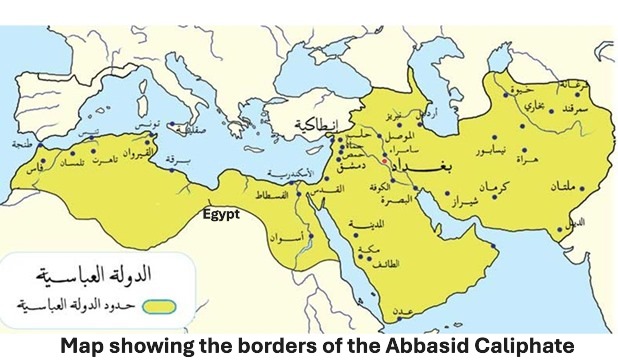
The Abbasid Caliphate is considered an important stage in the periods of rule that Egypt went through in the Islamic era. The fate of this state, which arose when the Abbasid leader Abu Muslim al-Khorasani declared a revolution against the Umayyads in 129 AH, was decided on Egyptian soil. A battle took place between the Umayyads and the Abbasids, which began first at the Zab River, one of the tributaries of the Tigris River, and then the battle was moved to Egypt, where the Abbasid armies, led by Salih bin Ali al-Abbasi, triumphed over the Umayyads, and the Umayyad Caliph Marwan II was killed in Dhu al-Hijjah in 132 AH, at the town of Abu Sir in the Giza region.
After the Abbasids' victory over the Umayyads, their establishment of the caliphate, and their entry into Egypt, the Abbasid commander Salih bin Ali established a capital for himself in Egypt called "Al-Askar," in 132 AH/750 AD, instead of the city of Fustat. Despite the Abbasids' control over Egypt, their influence was not stable there, which encouraged one of the Turkish leaders in the Abbasid army in Egypt, "Muhammad bin Tughj al-Ikhshid," to seize power and begin the era of the Ikhshidid state in Egypt.
Source: https://www.sis.gov.eg/section/10/800?lang=ar








Comments
0No comments yet. Be the first to share your thoughts!